name: mila-partenaires-jun26 class: title, middle ### Towards designing functional materials with GFlowNets Alex Hernández-García (he/il/él) .turquoise[Symposium des partenaires · Mila · June 3th 2026] .center[ <a href="https://mila.quebec/"><img src="../assets/images/slides/logos/mila-beige.png" alt="Mila" style="height: 4em"></a> <a href="https://www.umontreal.ca/"><img src="../assets/images/slides/logos/udem-white.png" alt="UdeM" style="height: 4em"></a> ] .center[ <a href="https://institut-courtois.umontreal.ca/"><img src="../assets/images/slides/logos/institut-courtois.png" alt="Institut Courtois" style="height: 2.5em"></a> <a href="https://ivado.ca/"><img src="../assets/images/slides/logos/ivado.png" alt="IVADO" style="height: 2.5em"></a> ] .smaller[.footer[ Slides: [alexhernandezgarcia.com/slides/{{ name }}](https://alexhernandezgarcia.com/slides/{{ name }}) ]] .qrcode[] --- ## Traditional discovery cycle ### (From a machine learning point of view) .context35[Current ecological and health challenges demand accelerating scientific discoveries.] .right-column-66[.center[]] .left-column-33[ <br> The traditional scientific discovery cycle: * is .highlight1[time-consuming], * .highlight1[financially and computationally expensive], and * is typically .highlight1[limited to a fraction of the candidate space]. ] .footnote[Oracle: any method used to validate a query, such as experimental measurements, simulations, etc.] --- ## Machine learning in the loop .context35[The traditional scientific discovery cycle is too slow for certain applications.] .right-column-66[<br>.center[]] .left-column-33[ <br> A .highlight1[machine learning model] can be: * trained with data from _real-world_ experiments and ] .footnote[This ML model is _predictive_ or _discriminative_: classification or regression.] --- count: false ## Machine learning in the loop .context35[The traditional scientific discovery cycle is too slow for certain applications.] .right-column-66[<br>.center[]] .left-column-33[ <br> A .highlight1[machine learning model] can be: * trained with data from _real-world_ experiments and * used to quickly and cheaply evaluate queries ] .footnote[This ML model is _predictive_ or _discriminative_: classification or regression.] --- count: false ## Machine learning in the loop .context35[The traditional scientific discovery cycle is too slow for certain applications.] .right-column-66[<br>.center[]] .left-column-33[ <br> A .highlight1[machine learning model] can be: * trained with data from _real-world_ experiments and * used to quickly and cheaply evaluate queries .conclusion[There are infinitely many conceivable materials, combinatorially many are potentially stable. Are predictive models enough?] ] --- ## _Generative_ machine learning in the loop .context30[Even perfect predictive models aren't enough!] .right-column-66[<br>.center[]] .left-column-33[ <br> .highlight1[Generative machine learning] can: * .highlight1[learn structure] from the available data, * .highlight1[generalise] to unexplored regions of the search space and * .highlight1[build better queries] ] .footnote[Generative models learn to propose or generate new candidates.] --- count: false ## _Generative_ machine learning in the loop .context30[Even perfect predictive models aren't enough!] .right-column-66[<br>.center[]] .left-column-33[ <br> .highlight1[Generative machine learning] can: * .highlight1[learn structure] from the available data, * .highlight1[generalise] to unexplored regions of the search space and * .highlight1[build better queries] .conclusion[However, should we rely solely on our best but very expensive _oracle_?] ] --- ## _Multi-fidelity_ active learning with generative modelling .right-column-66[<br>.center[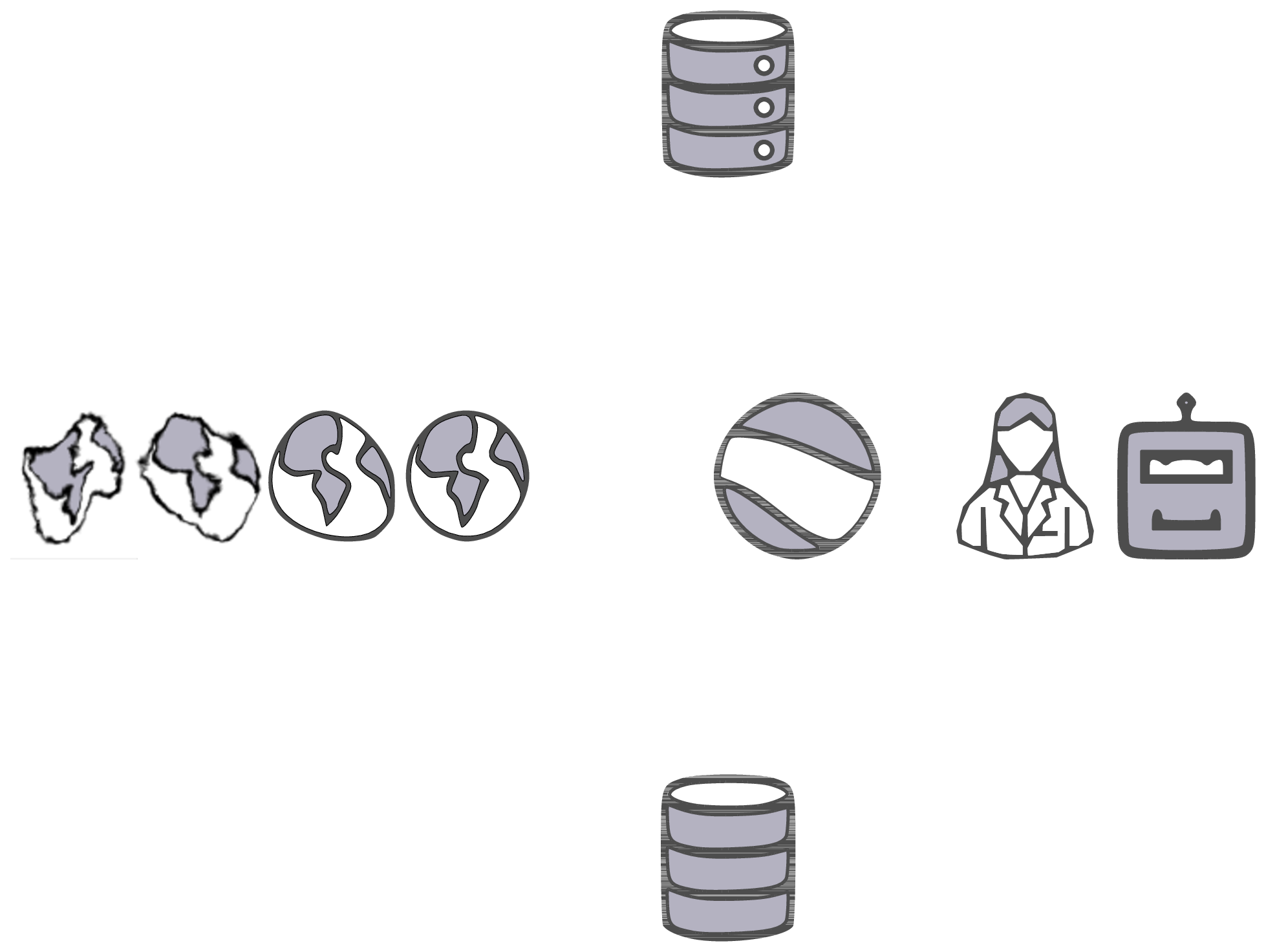]] .left-column-33[ <br> .highlight1[Multi-fidelity active learning] can: * leverage the availability of .highlight1[multiple oracles] with different .highlight1[costs and fidelity] * efficiently use the right level of accuracy needed for each query .conclusion[Multi-fidelity active learning can leverage the diversity of methods available in science.] ] .references[Hernandez-Garcia, Saxena et al. [Multi-fidelity active learning with GFlowNets](https://arxiv.org/abs/2306.11715). TMLR, 2024] --- count: false ## _Multi-fidelity_ active learning with generative modelling .right-column-66[<br>.center[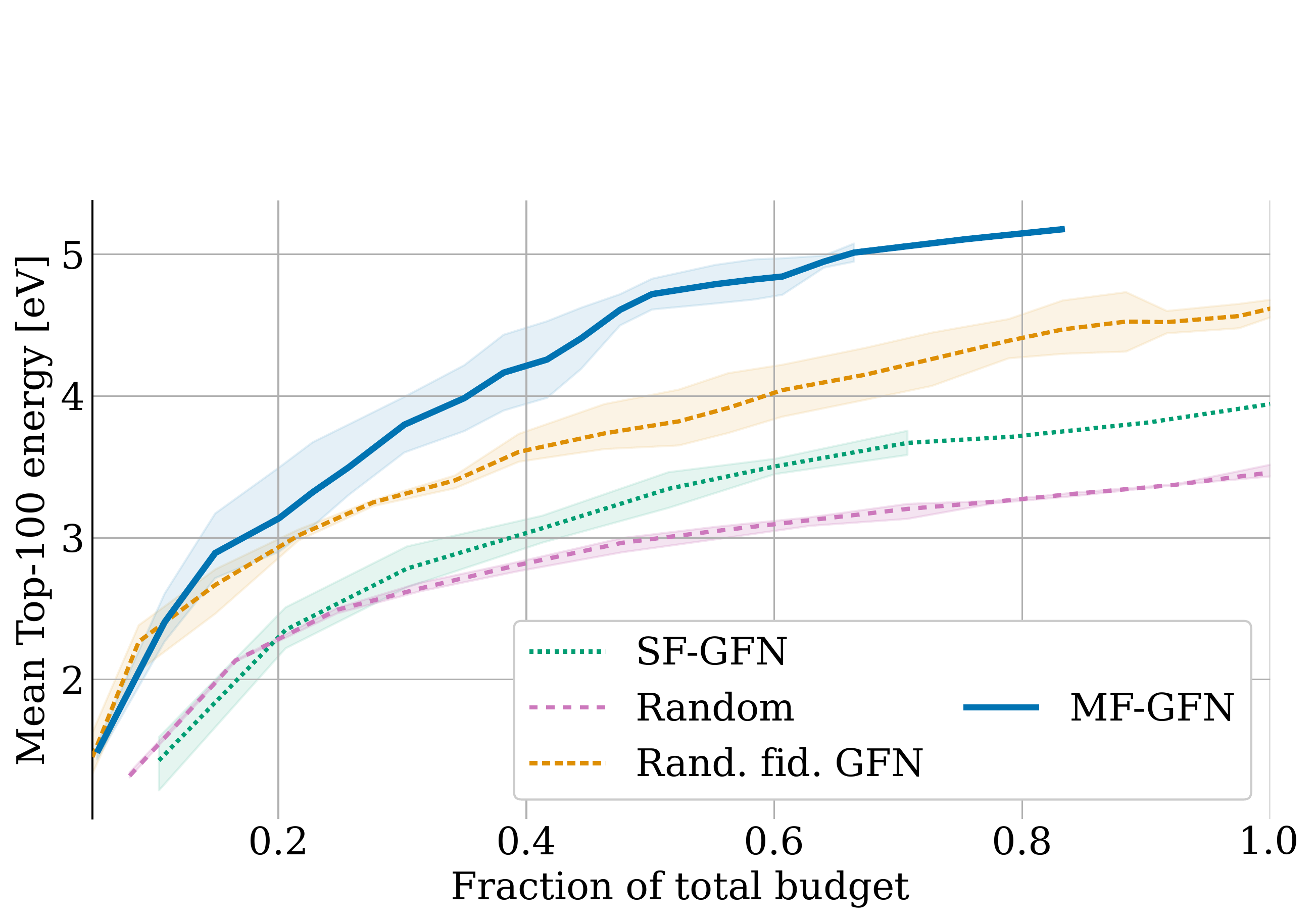]] .left-column-33[ <br> .highlight1[Multi-fidelity active learning] can: * leverage the availability of .highlight1[multiple oracles] with different .highlight1[costs and fidelity] * efficiently use the right level of accuracy needed for each query .conclusion[Multi-fidelity active learning can leverage the diversity of methods available in science.] ] .references[Hernandez-Garcia, Saxena et al. [Multi-fidelity active learning with GFlowNets](https://arxiv.org/abs/2306.11715). TMLR, 2024] --- count: false name: solid-state-electrolytes class: title, middle ## Example application ### Design of novel lithium electrolytes with high ionic conductivity for solid-state batteries .center[ <figure> <img src="../assets/images/slides/ionic-conductivity/liquid_vs_solid_trans.png" alt="A cartoon depicting an illustration of a liquid battery and a solid-state battery side by side." style="width: 70%"> <figcaption>.smaller[Adapted from: <a href="https://article.murata.com/en-sg/article/basic-lithium-ion-battery-4">Murata</a>]</figcaption> </figure> ] --- ## Example application ### Design of novel lithium electrolytes with high ionic conductivity for solid-state batteries .right-column-66[.center[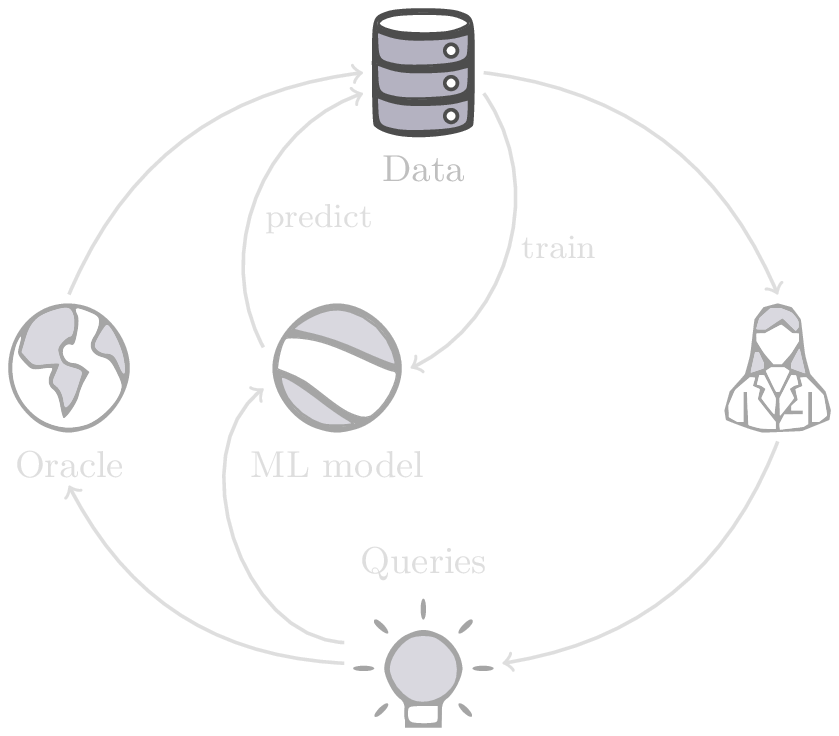]] .left-column-33[ .h1[Data]: * Scarce and scattered data * Especially of high quality * Not ready for ML use ] --- ## OBELiX ### A new data set of crystal structures for solid-state batteries <img src="../assets/images/slides/ionic-conductivity/obelix.png" alt="Obelix" style="width: 10%; bottom: 1em; right: 2em; position: absolute;"> .right-column-66[.center[]] .left-column-33[ We curated a data set of nearly 600 materials with experimentally measured ionic conductivity. <br><br> .center[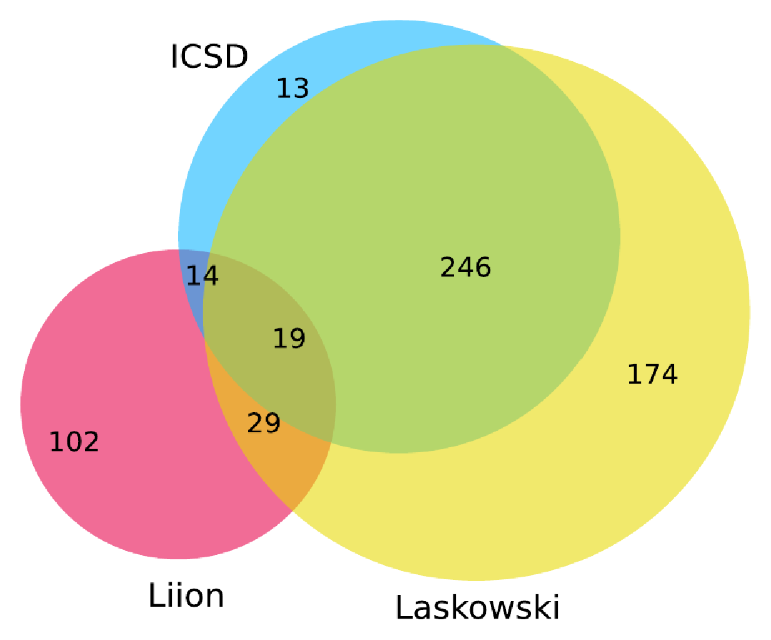] ] .full-width[ - Paper: [arxiv.org/abs/2502.14234](https://arxiv.org/abs/2502.14234) - Code and data set: [github.com/NRC-Mila/OBELiX](https://github.com/NRC-Mila/OBELiX/tree/main) ] --- ## Example application ### Design of novel lithium electrolytes with high ionic conductivity .right-column[.center[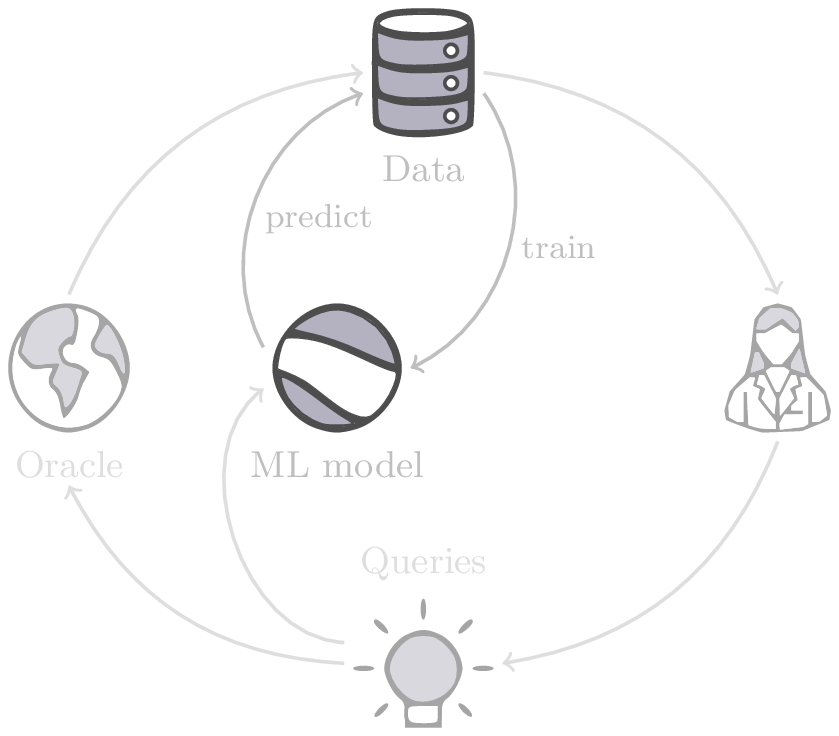]] .left-column[ .h1[ML predictive model]: - Random forest - Multi-layer perceptron - Graph neural networks - ... ] --- count: false ## Example application ### Design of novel lithium electrolytes with high ionic conductivity .right-column[.center[]] .left-column[ .h1[ML predictive model]: - Random forest - Multi-layer perceptron - Graph neural networks - ... <br><br> .center[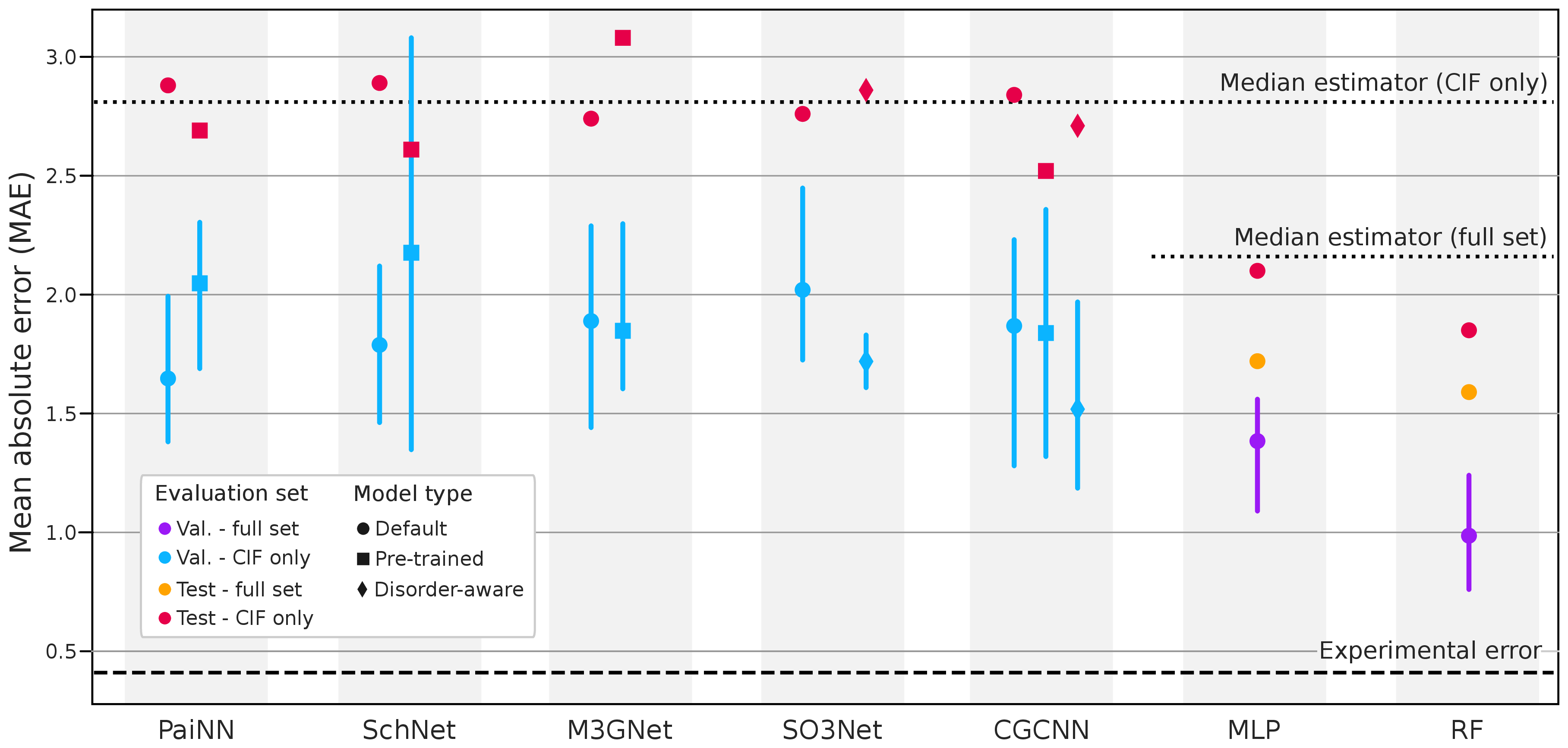] ] --- ## Example application ### Design of novel lithium electrolytes with high ionic conductivity .right-column[.center[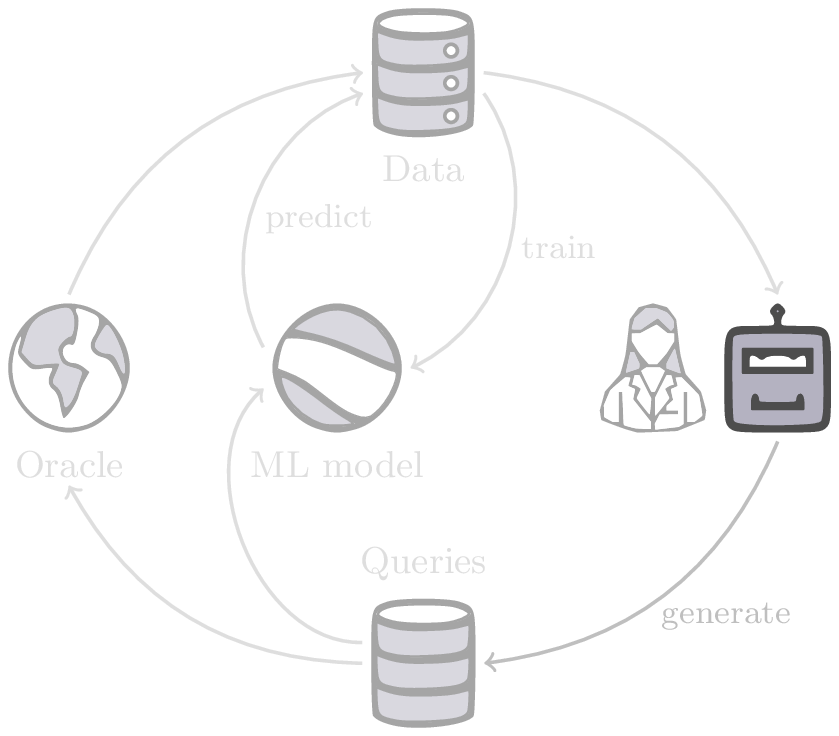]] .left-column[ .h1[Generative ML model]: - The generated candidates should: - have the target property - have other desirable properties (lithium, available elements, etc.) - be realistic (physical constraints) - be diverse - The available data sets are extremely small for ML standards. ] --- count: false name: crystal-gfn class: title, middle ## Crystal-GFN: GFlowNets for crystal structures Mila AI4Science: Alex Hernandez-Garcia, Alexandre Duval, Alexandra Volokhova, Yoshua Bengio, Divya Sharma, Pierre Luc Carrier, Yasmine Benabed, Michał Koziarski, Victor Schmidt, Pierre-Paul De Breuck .smaller70[Mila AI4Science et al. [Crystal-GFN: sampling crystals with desirable properties and constraints](https://arxiv.org/abs/2310.04925). AI4Mat, NeurIPS 2023 (spotlight)] .center[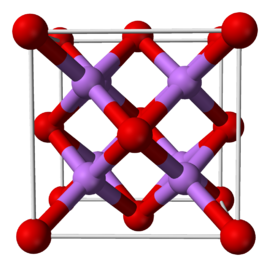] --- ## Crystal generation with machine learning ### The prevalent denoising diffusion approach - Most current methods rely on denoising diffusion models trained on existing data, with limited potential for _discovery_. - Most previous works tackle crystal structure generation in the space of atomic coordinates and _struggle to preserve the symmetry properties_. - Most methods are not suited for designing crystals _with specific properties_. .center[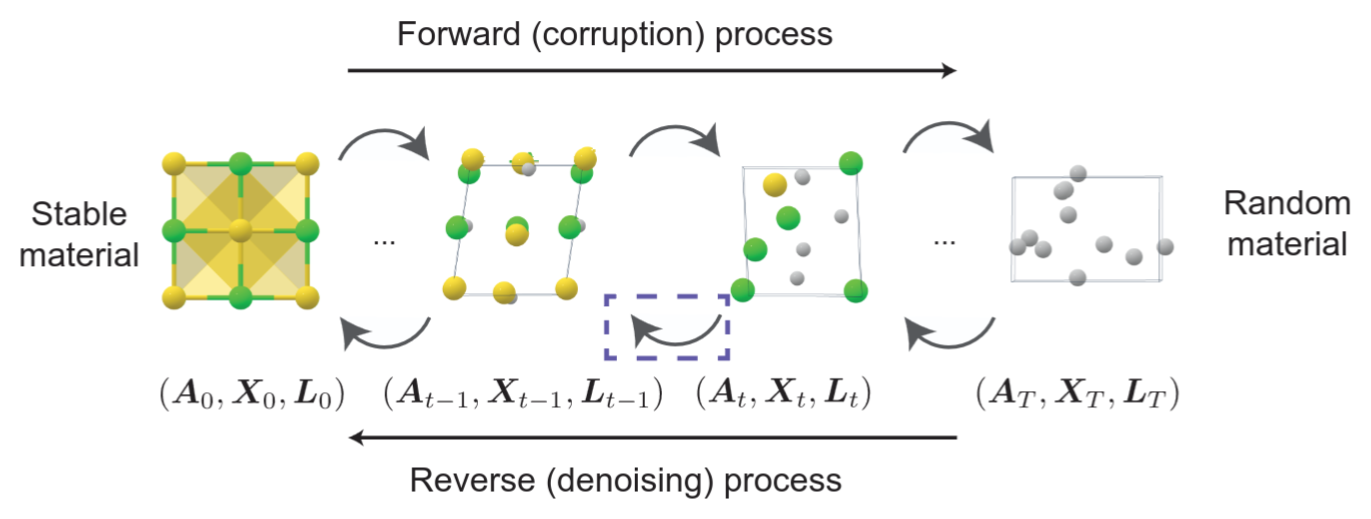] --- ## Crystal-GFN ### Crystal structure generation as sequential decision making - Instead of optimising the atom positions by learning from a small data set, we draw .highlight1[inspiration from theoretical crystallography to sample crystals in a lower-dimensional space of crystal structure parameters]: space group, composition, lattice parameters - As a GFlowNet, Crystal-GFN is _data-agnostic_, and is trained itself with a guiding reward function that can be any property. .center[] .references[Jain et al. [GFlowNets for AI-Driven Scientific Discovery](https://pubs.rsc.org/en/content/articlelanding/2023/dd/d3dd00002h). Digital Discovery, Royal Society of Chemistry, 2023.] --- ## GFlowNets for science ### 3 key ingredients .context[Materials and drug discovery involve .highlight1[sampling from unknown distributions] in .highlight1[discrete or mixed, high-dimensional, combinatorially large spaces.]] -- <br><br> 1. .highlight1[Diversity] as an explicit objective. -- - Given a score or reward function $R(x)$, learn to _sample proportionally to the reward_. -- 2. .highlight1[Compositionality] in the sample generation. -- - A meaningful decomposition of samples $x$ into multiple sub-states $s_0\rightarrow s_1 \rightarrow \dots \rightarrow x$ can yield generalisable patterns. -- 3. .highlight1[Deep learning] to learn from the generated samples. -- - A machine learning model can learn the transition function $F(s\rightarrow s')$ and generalise the patterns. --- ## Crystal-GFlowNet ### Sequential generation .center[] --- count: false ## Crystal-GFlowNet ### Sequential generation .center[] --- count: false ## Crystal-GFlowNet ### Sequential generation .center[] --- count: false ## Crystal-GFlowNet ### Sequential generation .center[] --- count: false ## Crystal-GFlowNet ### Sequential generation .center[] --- count: false ## Crystal-GFlowNet ### Sequential generation .center[] --- count: false ## Crystal-GFlowNet ### Sequential generation .center[] --- count: false ## Crystal-GFlowNet ### Sequential generation .center[] --- count: false ## Crystal-GFlowNet ### Sequential generation .center[] .conclusion[Crystal-GFN binds multiple spaces representing crystallographic and material properties, setting intra- and inter-space hard constraints in the generation process.] --- ## GFlowNet approach ### Advantages .context[We generate materials in the lower-dimensional space of crystal structure parameters.] * Constructing materials by their crystal structure parameters allows us to introduce .highlight1[physicochemical and geometric _hard_ constraints]: -- * Charge neutrality of the composition. * Compatibility of composition and space group. * Hierarchical structure of the space group. * Compatibility of lattice parameters and lattice system. -- * .highlight1[Searching in the lower-dimensional space] of crystal structure parameters may be more efficient than in the space of atom coordinates. -- * Provided we have access to a predictive model of a material property, we can .highlight1[flexibly generate materials with desirable properties]. -- * We can .highlight1[flexibly sample materials with specific characteristics, such as composition or space group]. -- * Training the generative model does not depend on a data set, but on a proxy model of the property of interest. --- count: false ## Crystal-GFlowNet ### Material properties We can train a Crystal-GFN with any reward function, provided it is computationally tractable. Therefore, we can use it to .highlight1[generate materials with different properties]. We have tested the following properties: - .highlight2[Formation energy] per atom [eV/atom], via a pre-trained machine learning model: indicative of the material's stability. - .alpha50[Electronic band gap [eV] (squared distance to a target value, 1.34 eV), via a pre-trained machine learning model: relevant in photovoltaics, for instance.] - .alpha50[Unit cell .highlight2[density] [g/cm<sup>3</sup>]: convenient as a proof of concept because we can calculate it _exactly_ from the GFN outputs.] -- - Soon to come: .h2[ionic conductivity]! --- ## Results ### Formation energy .context35[Formation energy as predicted by a ML model.] .center[] --- count: false ## Results ### Formation energy .context35[Formation energy as predicted by a ML model.] .center[] --- count: false ## Results ### Formation energy .context35[Formation energy as predicted by a ML model.] .center[] --- count: false ## Results ### Formation energy .context35[Formation energy as predicted by a ML model.] .center[] --- count: false ## Results ### Formation energy .context[.highlight1[After training, Crystal-GFN samples structures with even lower formation energy [eV/atom] than the validation set.]] .center[] --- ## Results ### Restricted sampling .context[Crystal-GFN is flexible by design, inspired by the needs of domain experts.] .left-column-33[ We restrict the sampling space at sampling time: - A: Composition restricted to Fe and O, with a maximum of 10 atoms per element. - B: Ternary space Li-Mn-O, with maximum 16 atoms. - C: Only cubic lattices. - D: Lattice lengths between 10 and 20 angstroms and angles between 75 and 135 degrees. ] .right-column-66[.center[]] --- ## Crystal-GFN: Extensions and variations Rather than a fixed model, we see Crystal-GFN as a flexible framework that allows for multiple extensions and variations: - The reward can be any property of interest: formation energy, band gap, energy above hull, ionic conductivity, adsorption energy... - The parameters that define a crystal can be changed, swapped, extended...: - Space group 🡢 Composition 🡢 Lattice parameters - Composition 🡢 Space group 🡢 Lattice parameters - Composition 🡢 Space group - Composition 🡢 Space group 🡢 Wyckoff positions - Composition 🡢 Space group 🡢 Wyckoff positions 🡢 Atomic positions - Crystal-GFN can precede the generation of a catalyst surface: Catalyst GFlowNet .cite[(Podina et al., 2025)] .references[ * Mila AI4Science et al. [Crystal-GFN: sampling crystals with desirable properties and constraints](https://arxiv.org/abs/2310.04925). AI4Mat, NeurIPS 2023 (spotlight) * Podina and Humer et al. [Catalyst GFlowNet for electrocatalyst design: A hydrogen evolution reaction case study](https://arxiv.org/abs/2510.02142). AI4Mat, NeurIPS 2025. ] --- count: false name: title class: title, middle ## Back to our example ### Design of novel lithium electrolytes with high ionic conductivity for solid-state batteries .center[ <figure> <img src="../assets/images/slides/ionic-conductivity/liquid_vs_solid_trans.png" alt="A cartoon depicting an illustration of a liquid battery and a solid-state battery side by side." style="width: 70%"> <figcaption>.smaller[Adapted from: <a href="https://article.murata.com/en-sg/article/basic-lithium-ion-battery-4">Murata</a>]</figcaption> </figure> ] --- ## Example application ### Design of novel lithium electrolytes with high ionic conductivity .right-column-66[.center[]] --- count: false ## Example application ### Design of novel lithium electrolytes with high ionic conductivity .right-column-66[.center[]] .left-column-33[ .h1[Oracle]: experimental validation - Requires synthesising the material - Very high financial cost and multiple months per candidate. ] --- ## Example application ### Design of novel lithium electrolytes with high ionic conductivity .right-column-66[.center[]] .left-column-33[ .h1[Oracles]: - Experimental validation - .h2[DFT] - .h2[MLIPs] - ... ] --- ## Example application ### Design of novel lithium electrolytes with high ionic conductivity .right-column-66[.center[]] .left-column-33[ .h1[Oracles]: - Experimental validation - .h2[DFT] - .h2[MLIPs] - ... .conclusion[What is the accuracy and the cost of DFT and MLIPs to estimate the ionic conductivity?] ] --- ## Ionic conductivity estimation ### A comparison of methods .context[DFT has been widely used to estimate the ionic conductivity and recently MLIPs are widely available too.] .left-column-33[.center[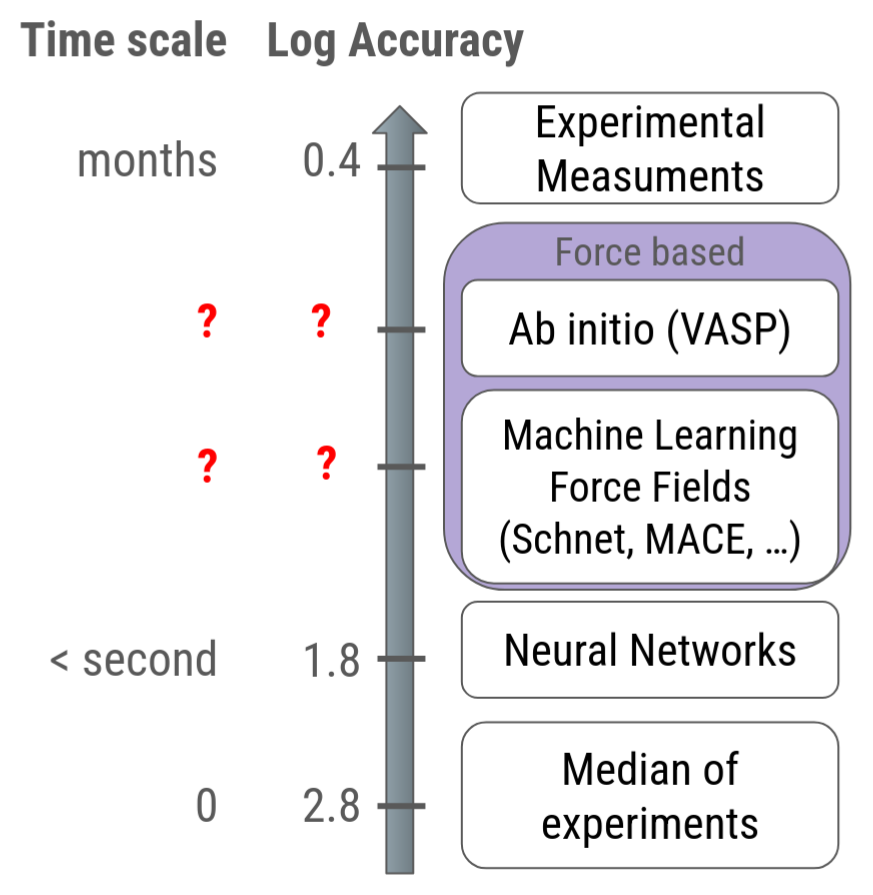] Paper: [arxiv.org/abs/2603.28012](https://arxiv.org/abs/2603.28012) ] .right-column-66[.center[]] --- ## Ionic conductivity estimation ### A comparison of methods .left-column[.center[.bigger[MACE]]] .right-column[.center[.bigger[DFT]]] .full-width[.center[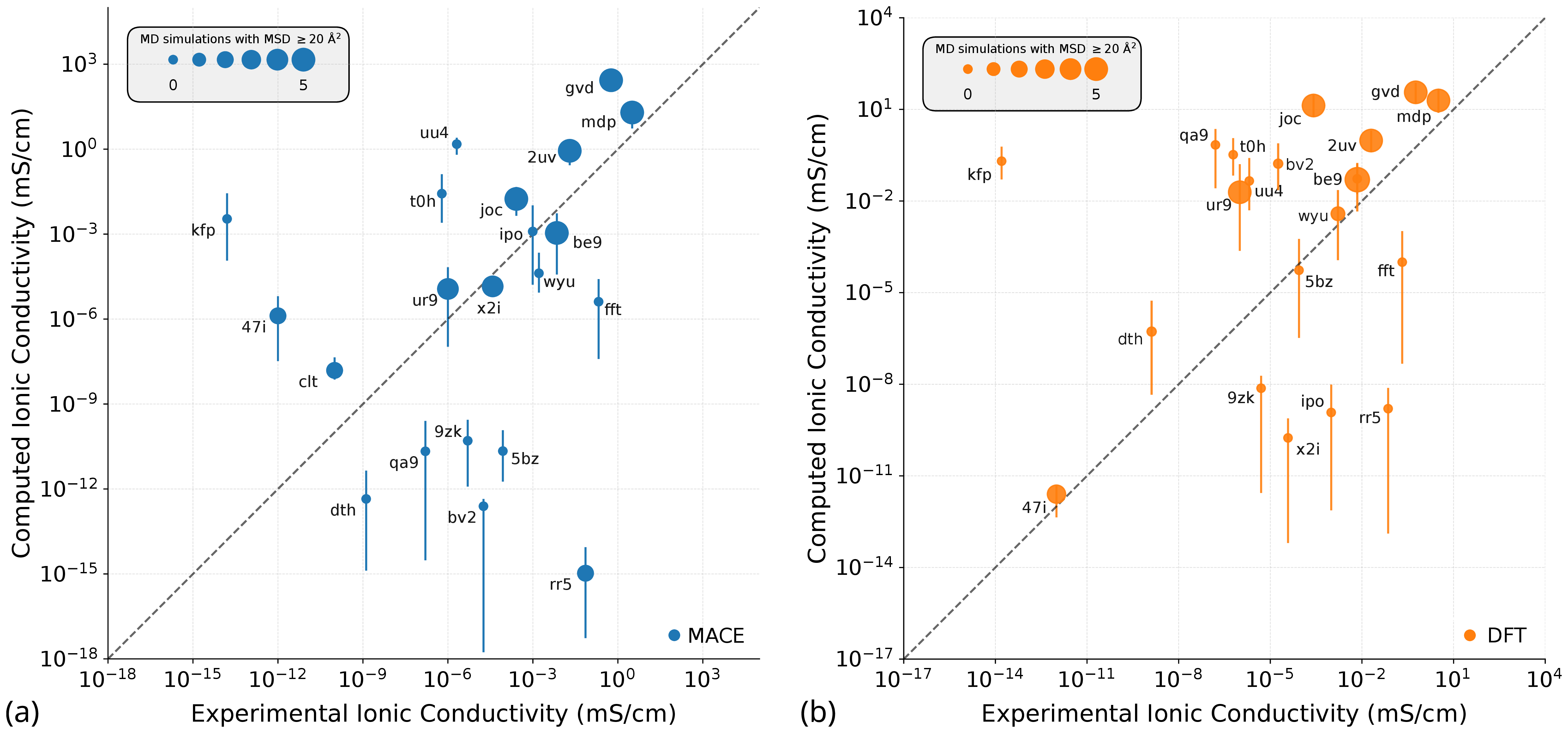]] --- count: false ## Ionic conductivity estimation ### A comparison of methods .left-column[.center[.bigger[MACE]]] .right-column[.center[.bigger[DFT]]] .full-width[.center[]] .conclusion[The estimation of the ionic conductivity with DFT exhibits weak correlation with experimental measurements, and the correlation MACE-based estimation is only slightly weaker.] --- ## Ionic conductivity estimation ### A comparison of methods .left-column-33[.center[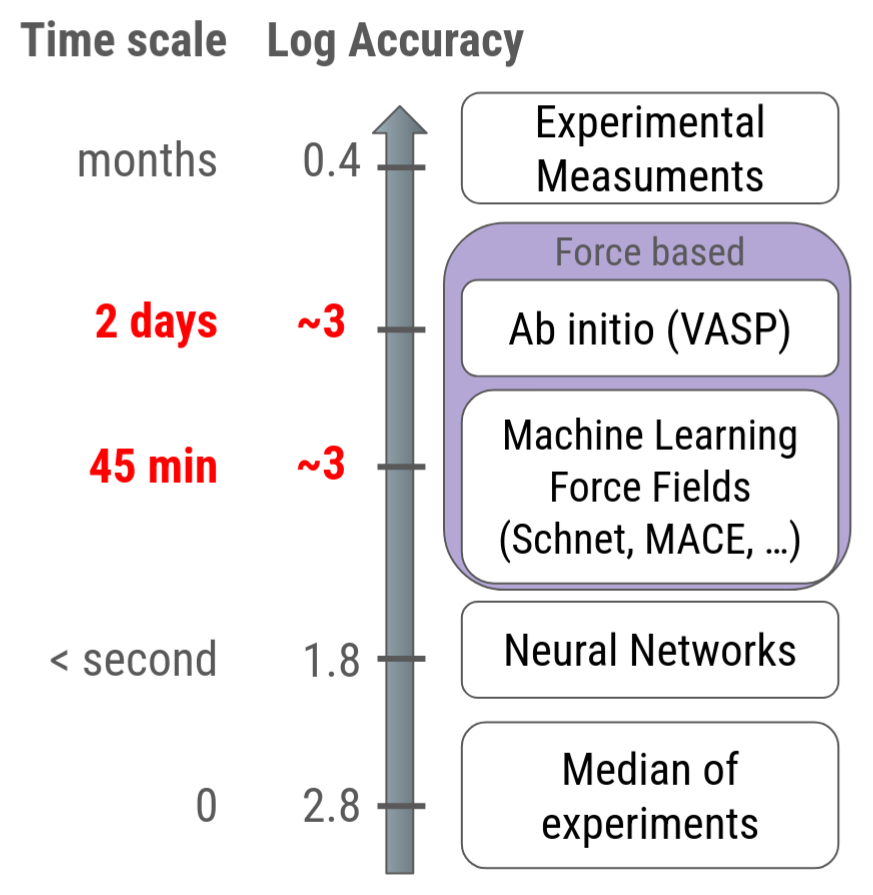] Paper: [arxiv.org/abs/2603.28012](https://arxiv.org/abs/2603.28012) ] .right-column-66[.center[]] --- ## Summary - .h1[Multi-fidelity active learning] with generative models can be effective at exploring large candidate spaces with expensive validation methods. - Hernandez-Garcia, Saxena et al. [Multi-fidelity active learning with GFlowNets](https://arxiv.org/abs/2306.11715). TMLR, 2024 - .h1[OBELiX is a curated data set of nearly 600 materials with experimentally measured ionic conductivity], ready for ML use. - Therrien et al. [OBELiX: A curated dataset of crystal structures and experimentally measured ionic conductivities for lithium solid-state electrolytes](https://arxiv.org/abs/2502.14234), Digital Discovery, 2026. - .h1[Crystal-GFN] offers a flexible framework for crystal structure generation with desirable properties and constraints, based on sequential decision making. - Mila AI4Science et al. [Crystal-GFN: sampling crystals with desirable properties and constraints](https://arxiv.org/abs/2310.04925). AI4Mat, NeurIPS 2023 (spotlight). - We have .h1[compared DFT and ML force fields for the estimation of ionic conductivities] in solid lithium electrolytees: both have similarly weak correlation with experimental values. - Shaaban Kabakibo et al. [A comparative study of molecular dynamics approaches for simulating ionic conductivity in solid lithium electrolytes](https://arxiv.org/abs/2603.28012), AI4Mat, ICML 2026. --- name: mila-partenaires-jun26 class: title, middle  Alex Hernández-García, Félix Therrien, Divya Sharma, Dounia Shaaban Kabakibo, Lena Podina... .center[ <a href="https://mila.quebec/"><img src="../assets/images/slides/logos/mila-beige.png" alt="Mila" style="height: 3em"></a> <a href="https://www.umontreal.ca/"><img src="../assets/images/slides/logos/udem-white.png" alt="UdeM" style="height: 3em"></a> <a href="https://institut-courtois.umontreal.ca/"><img src="../assets/images/slides/logos/institut-courtois.png" alt="Institut Courtois" style="height: 3em"></a> <a href="https://ivado.ca/"><img src="../assets/images/slides/logos/ivado.png" alt="IVADO" style="height: 3em"></a> ] .footer[[alexhernandezgarcia.com](https://alexhernandezgarcia.com/) | [alex.hernandez-garcia@mila.quebec](mailto:alex.hernandez-garcia@mila.quebec)] | [alexhergar.bsky.social](https://bsky.app/profile/alexhergar.bsky.social) [](https://bsky.app/profile/alexhergar.bsky.social)<br> .smaller[.footer[ Slides: [alexhernandezgarcia.com/slides/{{ name }}](https://alexhernandezgarcia.com/slides/{{ name }}) GFlowNet library: [github.com/alexhernandezgarcia/gflownet](https://github.com/alexhernandezgarcia/gflownet) Active learning library: [github.com/milaforscience/activelearning](https://github.com/milaforscience/activelearning) ]]